Emergency Roof Repair in Pasadena, TX
When your roof has an active opening — from storm damage, a fallen tree, or a sudden leak pouring water into your home — waiting for a scheduled appointment is not an option. We provide same-day emergency response for Pasadena homeowners to stop water entry, secure exposed structure, and prevent further interior damage.
Situations That Require Immediate Roof Repair
Not every roof problem is an emergency. But these situations can cause rapid, compounding damage to your home's interior and structure if they aren't addressed within hours — not days.
Active water entering the home during or after rain
If water is dripping through your ceiling, running down walls, or pooling on floors during rainfall, the roof has an active breach. Every hour of delay means more saturated drywall, insulation, and potential mold development — especially in Pasadena's 70–80% humidity.
Storm damage creating a visible roof opening
High winds, hail, or flying debris can tear off shingles, puncture decking, or dislodge flashing. If you can see sky through any part of your roof structure — from inside the attic or from ground level — the roof is compromised and needs immediate protection.
Fallen tree or large branch on the roof
A tree or heavy branch on the roof creates immediate structural risk. The weight can cause progressive sagging, crack decking, and open gaps that allow water in. Do not attempt to remove it yourself — it may be supporting collapsed sections that will worsen without it.
Sagging ceiling or visible structural movement
A ceiling that appears to bow, sag, or feel spongy when touched may be holding accumulated water. This is a safety hazard — saturated drywall can collapse without warning. Evacuate the area beneath the sag and call for immediate assessment.
How Our Emergency Roof Repair Process Works
Every emergency follows a structured sequence designed to stop the damage first, then plan the permanent solution. Here's what to expect when you call.
You Call — We Prioritize
Describe the situation: water coming through the ceiling, visible roof damage, tree on the roof, or any active exposure. We assess urgency immediately and dispatch a crew. In most cases, we're on-site within 60 minutes for Pasadena and surrounding cities.
Assess the Damage On-Site
Our crew evaluates the roof from both the interior (attic, ceiling, walls) and exterior (roof surface, penetrations, structure). We identify the source and scope of the emergency, determine if it's safe to work, and explain the situation to you clearly. If you're wondering whether it's safe to check things yourself before we arrive, see how soon it's safe to inspect a roof after high winds.
Stop the Immediate Threat
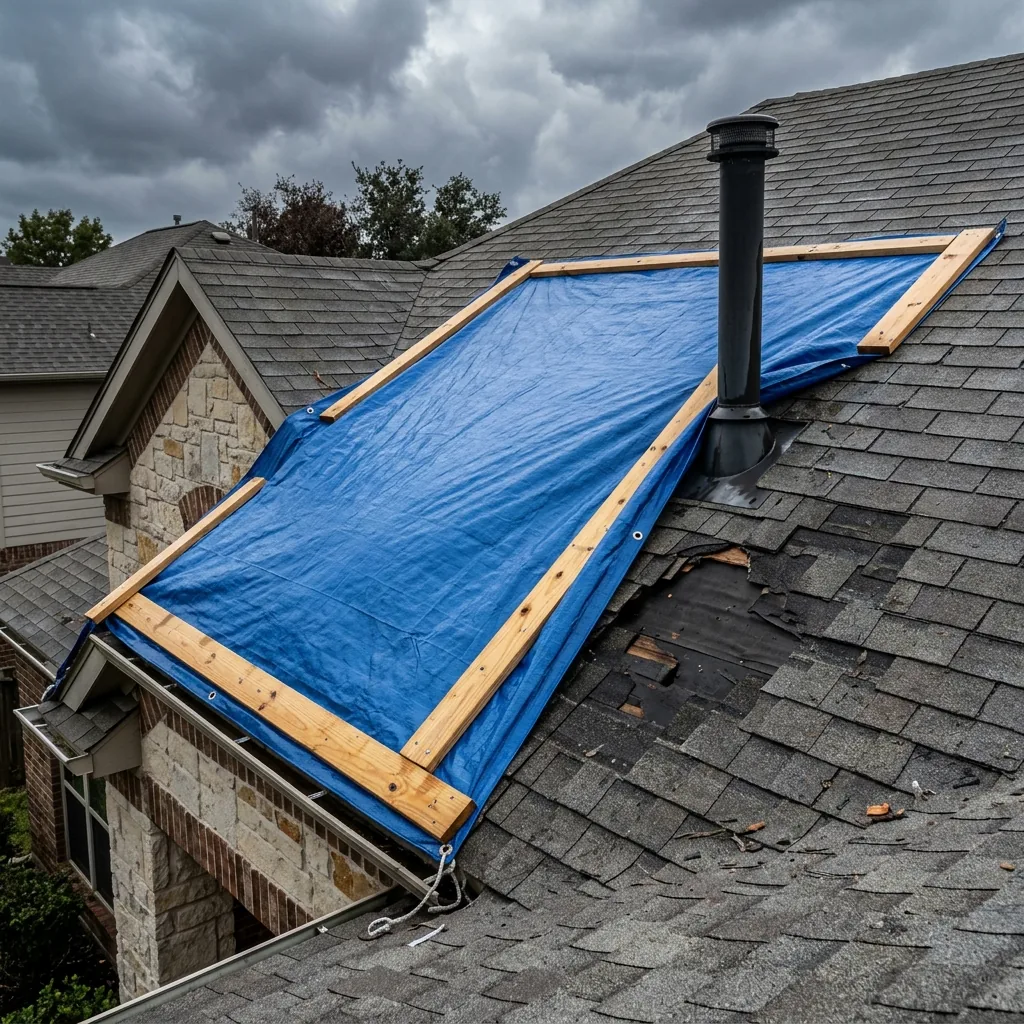
The first priority is always stopping water entry and securing any exposed structure. Depending on the situation, this may involve emergency patching, sealant application, temporary waterproofing, or coordinating emergency tarping for larger openings. For large-area covering needs, see our Emergency Roof Tarping service.
Document and Plan the Permanent Repair
We photograph all damage, document the emergency work performed, and provide a written estimate for the permanent restoration. This documentation is also useful if you need to file an insurance claim — we provide everything your insurer typically requires.
Types of Roof Emergencies We Handle
Each emergency type requires a different immediate response. Here are the most common situations we respond to across Pasadena and Southeast Houston.
Active Roof Leaks & Water Intrusion
A sudden roof leak pouring water into your living space, attic, or walls during heavy rain. The entry point may involve failed flashing, a blown-off section, or a deteriorated pipe boot that finally gave way under Pasadena's heavy rainfall. For non-urgent leaks, see our Roof Leak Repair service.
- Water actively dripping or flowing indoors
- Rapidly expanding ceiling stains
- Water pooling on floors during storms
Storm-Created Roof Damage
Severe thunderstorms, hail, and tropical systems are a recurring reality in Pasadena — Harris County has received more than a third of its 50+ federal disaster declarations since 2015 alone. High winds tear off shingles, hail punctures surfaces, and flying debris opens gaps that need immediate sealing. For full storm restoration, see Storm Damage Repair.
- Sections of missing or displaced roofing
- Hail-punctured surfaces
- Wind-opened gaps or lifted ridgecaps
Fallen Tree & Branch Impact Damage
A fallen tree or heavy branch can puncture through the roof surface into the decking and rafters below, creating an immediate structural opening. Harris County lost approximately 10% of its tree canopy between 2011 and 2021, and mature trees near homes remain a significant risk during wind events.
- Tree or branch resting on roof surface
- Visible hole or puncture in roof
- Cracked or displaced structural members
Emergency Patch & Temporary Waterproofing
When permanent repair cannot be completed immediately — due to weather, material availability, or scope — emergency patching and temporary waterproofing protect the structure until full restoration is possible. This is a stabilization step, not a substitute for permanent repair.
- Exposed decking or underlayment
- Open seams after storm lifting
- Failed penetration seals
Structural Roof Emergencies
Sagging roof lines, exposed or water-damaged decking, partial roof failure, and visible structural movement all indicate the roofing system has been compromised beyond the surface. Do not enter areas beneath a sagging or partially collapsed roof. Evacuate and call for professional assessment immediately.
- Visible sagging in roofline or ceiling
- Exposed or rotten roof decking
- Partial roof section collapse
Severe Wind Damage
High winds during Gulf Coast storms can lift, crack, or blow off large sections of roofing material — exposing the underlayment and decking to direct rain. When the damage is extensive enough that the next rainfall will cause interior flooding, it qualifies as an emergency. For full wind restoration, see Wind Damage Repair.
- Large area of missing shingles
- Ridge caps blown off
- Lifted flashing at transitions
What to Do Before Our Emergency Crew Arrives
While you wait for our team, these steps can help minimize damage and keep your family safe. Do not climb on the roof or attempt repairs yourself.
Move away from the affected area
If the ceiling is sagging or water is actively entering, move furniture and people away from the zone. Saturated drywall can collapse without warning.
Place containers under active drips
Buckets, towels, or plastic sheeting can help contain water and protect flooring until the crew arrives. Focus on catching the main drip points.
Document the damage with photos
Photograph interior water damage, ceiling stains, and any visible exterior damage from ground level. This helps both the repair assessment and any insurance claim.
Turn off electricity in affected rooms
If water is entering near light fixtures, outlets, or electrical panels, switch off the breaker for those rooms. Water and live wiring are a serious safety hazard.
Do not climb on the roof
A damaged roof surface is unstable, slippery, and potentially structurally compromised. Roof access should only be attempted by equipped professionals with fall protection.
For a more detailed walkthrough of what to do in the minutes and hours after water starts coming through your ceiling, see our guide on first steps when your roof is leaking after a storm.
Why Pasadena, TX Properties Face Higher Emergency Roof Risk
Pasadena sits in one of the most storm-active zones in the continental United States. Harris County has received over 50 federal disaster declarations since 1989 — and the frequency is increasing.
- Hurricane & tropical storm exposure — Harvey (2017), Ike (2008), Rita (2005), Beryl (2024), and Tropical Storm Allison (2001) all impacted Pasadena directly
- Severe thunderstorm frequency — Texas leads the nation in hail events and wind/hail insurance claims, with the Houston metro area receiving regular convective storms
- High-wind events — Gulf Coast storm systems regularly produce sustained winds and gusts that exceed the wind rating of standard asphalt shingle installations
- Mature tree risk — despite canopy loss, mature trees near residential structures remain a leading source of emergency roof damage during wind events
- Flooding compounds roof damage — with 86% of Pasadena buildings estimated to be at flood risk, water-related roof emergencies can escalate rapidly
Emergency Repair vs. Permanent Restoration — What's the Difference?
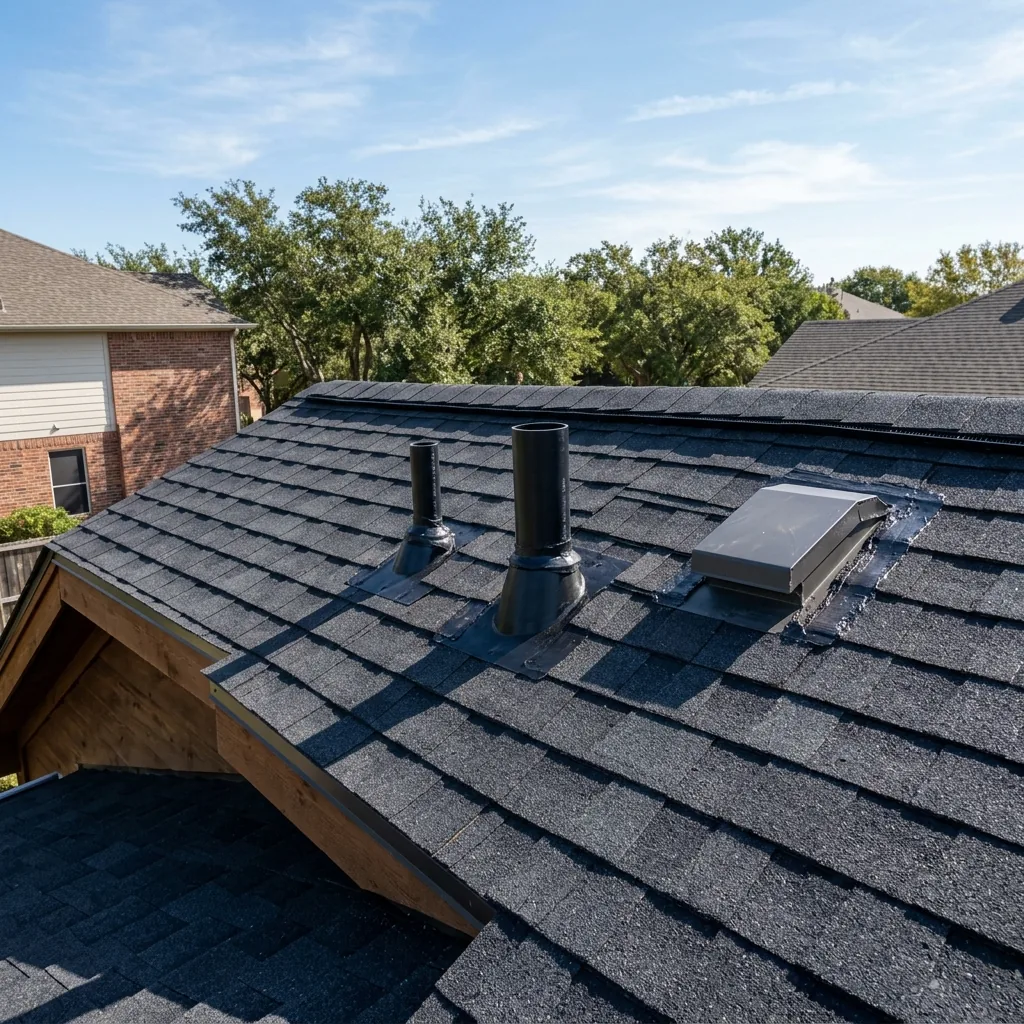
Emergency repair is a stabilization step. Its purpose is to stop the immediate threat — water entry, structural exposure, or ongoing damage — as quickly as possible. This may involve emergency patches, sealants, temporary waterproofing, or securing loose materials.
Permanent repair is the full restoration that follows. It replaces damaged roofing materials, decking, flashing, or other components to return the roof to its pre-damage condition. Depending on scope, this may be scheduled within days of the emergency response or may require additional material procurement.
Both steps are essential. Emergency repair without follow-up leaves the roof vulnerable. Skipping the emergency step and waiting for a permanent fix risks compounding interior damage — particularly during Pasadena's active storm season from April through November.
We handle both phases and keep you informed throughout. After the emergency stabilization, you receive a written estimate for the permanent work — with full damage documentation for your records or insurance claim.
Damage Documentation for Insurance Claims
Most homeowner policies cover sudden, accidental roof damage from storms, fallen trees, and similar events. While we do not file claims on your behalf, we provide everything your insurer typically needs.
After a major storm, door-to-door "storm chasers" often follow close behind legitimate crews. Before signing anything, see our guide on how to avoid roofing scams after a Pasadena storm.
Emergency Roof Repair FAQ
We prioritize same-day response for active emergencies. In most cases, our crew can be on-site within 60 minutes of your call to assess the situation, stop water entry with temporary measures, and begin planning the permanent repair.
Any situation where the roof has an active opening allowing water, wind, or debris into the structure. This includes active leaks during rainfall, storm-created openings, fallen tree or branch damage, exposed or sagging decking, and any condition where waiting would result in further interior or structural damage.
For safety reasons, exterior roof work cannot be performed during active lightning, high winds, or heavy rainfall. However, we can begin interior damage mitigation immediately and will be on-site as soon as conditions allow safe roof access — often within hours of the weather clearing.
The first priority is stopping water entry. We assess the damage, apply temporary weatherproofing to prevent further interior damage, then document everything and provide a written estimate for the permanent restoration.
Most homeowner policies cover sudden, accidental roof damage from storms, fallen trees, and similar events. We provide detailed damage documentation with photos that you can share with your insurer to support your claim. We do not file claims on your behalf.
Emergency repair stops the immediate threat — water entry, exposed structure, or ongoing damage. Permanent repair is the full restoration that follows, replacing damaged materials, decking, flashing, or other components to return the roof to its pre-damage condition.
First, ensure everyone in the home is safe and move away from the affected area. Do not attempt to remove the tree yourself — it may be supporting unstable roof sections. Call us for an emergency assessment. We coordinate safe removal, secure the opening, and plan the structural repair.
Yes. Roof emergencies don't follow business hours, and neither do we for urgent situations. If your roof has an active opening or water is entering your home, call us regardless of time or day. We'll assess the urgency and dispatch a crew as quickly as safely possible.
Roof Emergency? Don't Wait — Call Now
If water is entering your home, a tree has damaged your roof, or storm damage has left your structure exposed — call us immediately. We'll stop the damage, secure the opening, and provide a clear path to permanent repair.