Professional Roof Inspection in Pasadena, TX
A professional roof inspection finds the problems you can't see from the ground — deteriorating flashing, early-stage granule loss, failing pipe boots, hidden moisture in the attic, and damage from storms you may not have noticed. We inspect all roof types, document everything with photos, and provide a written report with honest recommendations. No charge, no obligation.
When Your Roof Needs a Professional Assessment
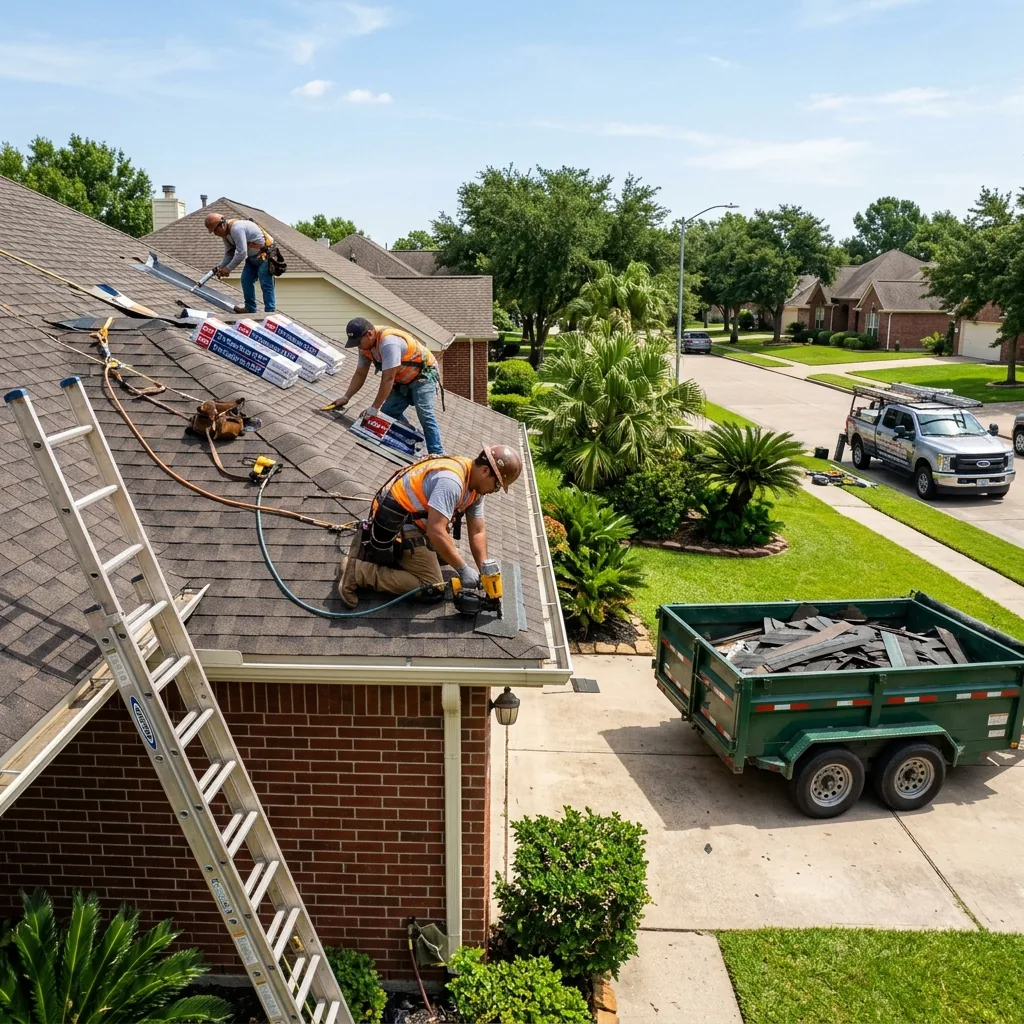
Most roof damage is invisible from ground level. These situations warrant a professional inspection to identify problems before they escalate into expensive repairs.
After a Storm or High Winds
Severe thunderstorms, hail events, and high winds can cause damage that isn't visible from the driveway — displaced flashing, loosened ridge caps, bruised shingles, and lifted edges. A post-storm inspection catches these issues before they become active leaks — follow our roof inspection checklist for after a Pasadena storm to know what to check first. If damage is confirmed, see Storm Damage Repair or Wind Damage Repair.
Signs of Water Intrusion
Ceiling stains, damp spots, musty odors, peeling paint, or bubbling drywall are interior evidence of a roof problem. An inspection identifies the actual entry point — which is often far from the visible stain — and determines the repair scope. For leak-specific diagnosis and repair, see Roof Leak Repair.
Aging Roof (15+ Years)
As roofs approach the midpoint of their expected lifespan, an inspection establishes baseline condition and identifies early-stage deterioration. In Pasadena's climate, asphalt shingles age faster than the national average due to intense UV, heat cycling, and humidity. Catching issues at this stage is far less expensive than waiting for failure.
Buying or Selling a Home
Buyers need to know the roof's actual condition before closing. Sellers benefit from a pre-listing inspection that identifies and addresses issues before they become negotiation points. A professional report provides objective, documented evidence for both parties.
Insurance Claim Documentation
Filing an insurance claim requires professional documentation of damage type, location, and extent. Our photo-documented inspection provides adjusters with the evidence needed to process claims efficiently. Many homeowners use our inspection as the foundation for their initial claim.
Annual Preventive Check
An annual inspection is the most cost-effective roof maintenance. Small issues — a cracked pipe boot, a lifted shingle, a clogged drain — cost very little to repair when caught early. Left undetected, they become leaks, water damage, and structural issues that cost thousands to fix.
What Our Roof Inspection Covers
Every inspection follows a systematic checklist tailored to your roof type. We don't just walk the surface — we evaluate every component of the roofing system.
Roof Surface & Material Condition
We assess the primary roofing material — shingle condition (cracking, curling, granule loss, missing tabs), membrane integrity (tears, punctures, delamination), or coating wear. This establishes overall system age and condition.
Penetrations & Pipe Boots
Every roof penetration — plumbing vents, exhaust fans, HVAC curbs — is a potential leak source. We check each pipe boot for cracking, each collar for seal integrity, and each curb flashing for proper adhesion. These small components cause a disproportionate number of roof leaks.
Flashing, Valleys & Transitions
Wall flashing, step flashing, valley metal, chimney flashing, and any roof-to-wall transition is inspected for separation, corrosion, sealant failure, and proper overlap. Transition points are the second most common leak source after penetrations.
Ridge, Hip & Edge Details
Ridge caps, hip shingles, drip edge, and fascia are evaluated for wind damage, displacement, and deterioration. These perimeter components bear the highest wind loads and are the first to fail in severe weather.
Gutters, Drainage & Ventilation
Gutter condition, downspout connections, drainage flow, and (on flat roofs) drains and scuppers are checked. Roof ventilation — ridge vents, soffit intake, and attic airflow — is evaluated for adequacy. Poor ventilation accelerates shingle aging in Pasadena's heat.
Attic-Side Assessment
When safely accessible, we inspect the attic for moisture evidence — damp insulation, water-stained rafters, daylight visible through the deck, and signs of mold or mildew. The attic tells the story that the roof surface sometimes hides.
Why Professional Inspection Catches What You Can't See
The majority of roof damage is invisible from ground level. By the time damage is obvious from the driveway, the underlying problem has often been developing for months.
- Pipe boots crack silently — rubber pipe boot seals dry-rot in Pasadena's UV and heat; they rarely show visible damage from ground level but are one of the most common leak sources on residential roofs
- Granule loss is gradual — asphalt shingles shed granules progressively; by the time you notice bald patches from the ground, significant UV protection has already been lost
- Flashing separation is hidden — wall and step flashing can separate by fractions of an inch — invisible at a distance but sufficient to allow water entry during wind-driven rain
- Attic moisture predates ceiling stains — water can saturate attic insulation for weeks before enough moisture accumulates to produce a visible ceiling stain in the living space below
- Hail damage is deceptive — hail impacts bruise shingles without immediately breaking through; the damage weakens the shingle and leads to premature failure months later
What You Receive: A Complete Photo-Documented Report
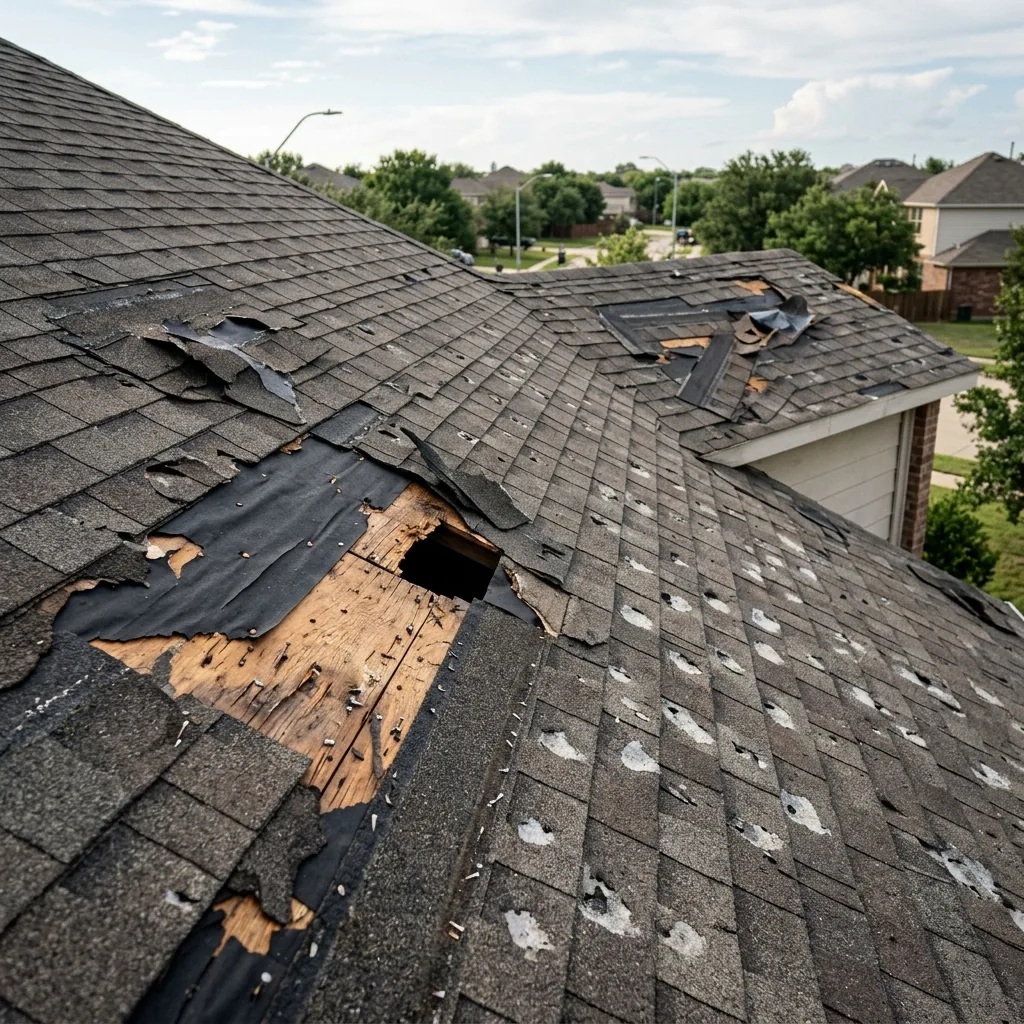
After every inspection, you receive a written report that documents exactly what we found — both the problems and the areas in good condition. This isn't a verbal summary on your doorstep; it's a professional document you can reference, share with your insurance company, or use to make informed decisions.
For each issue identified, the report includes a photo of the specific problem, its location on the roof, what caused it, how severe it is, and whether it requires immediate attention or can be monitored. If repair is recommended, a written estimate is included.
For areas in good condition, the report confirms their current state. This is equally valuable — it establishes a baseline for future comparison and gives you confidence about the parts of your roof that are performing well.
If no repairs are needed, we'll tell you that. Our inspection is not a sales pitch — it's an honest assessment. If your roof is in good shape, that's the best possible outcome and exactly what we'll report.
Inspection Adapted to Your Roof Type
Different roofing systems have different failure points. Our inspection checklist adapts to evaluate the specific vulnerabilities of your roof type.
Inspection, Estimate & Repair: Understanding the Sequence
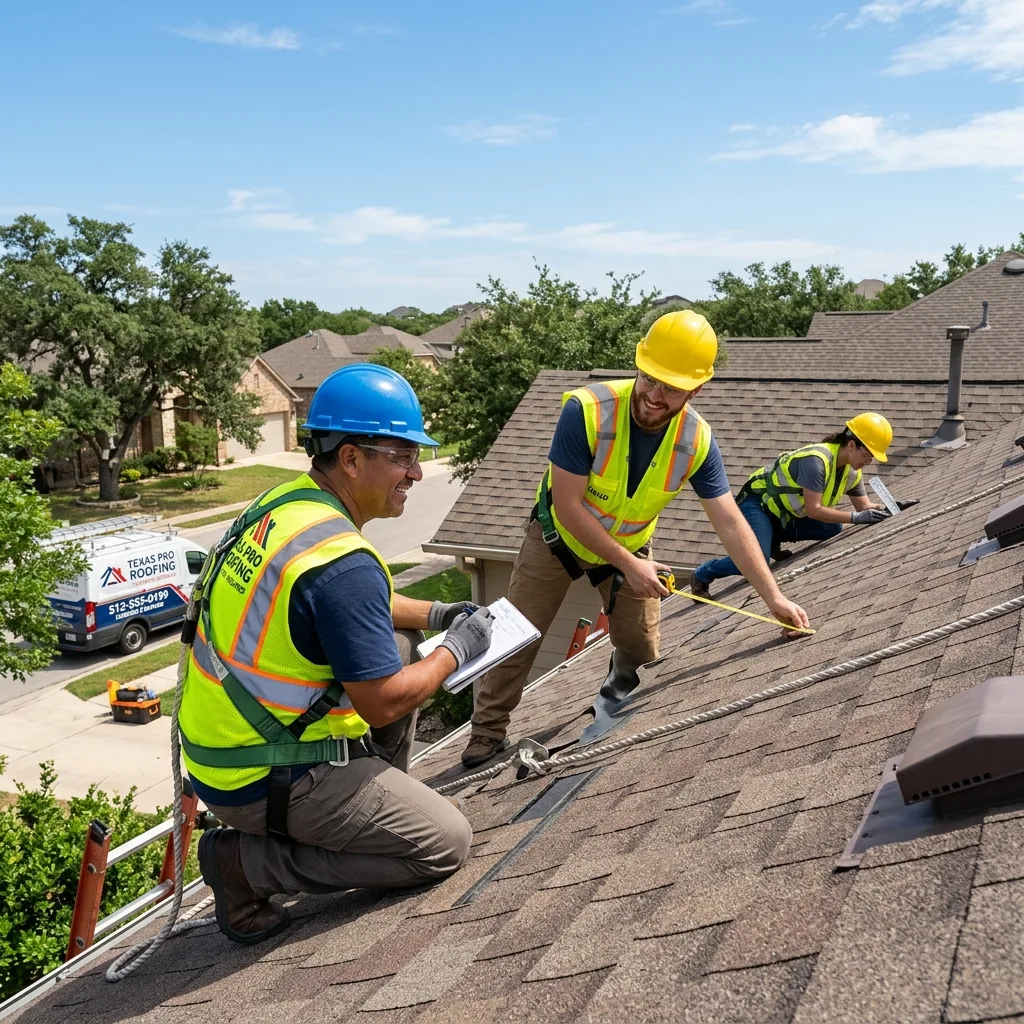
These three steps serve different purposes, and understanding the difference helps you make informed decisions.
Inspection answers: "What is the current condition of my roof?" It identifies damage, deterioration, and potential issues. The inspection is diagnostic — its purpose is to find and document what exists.
Estimate answers: "What will it cost to fix?" Based on the inspection findings, we provide a written estimate that outlines the specific repair work needed, materials required, and total cost — for typical price ranges by repair type, see our roof repair cost guide for Pasadena, TX. The estimate is a commitment to scope and price.
Repair is the execution: fixing the identified problems using the approach outlined in the estimate. Each repair page on our site addresses the specific techniques for different damage types. When an inspection reveals extensive or widespread damage, the findings also help determine whether repair or full roof replacement is the more sensible path for your roof and budget.
This sequence ensures that no one pays for repair work without first understanding exactly what's wrong and exactly what the repair involves. The inspection is the foundation of every honest repair recommendation.
Roof Inspection FAQ
Yes. Our standard roof inspection is free with no obligation. We inspect, document findings with photos, and provide a written report with honest recommendations. No charge, no pressure.
Surface material condition, all penetrations (vents, pipes, HVAC), flashing at walls and transitions, valleys and ridges, gutters and drainage, and attic-side assessment when accessible. Everything documented with photos.
Residential: 45 minutes to 1.5 hours depending on roof size and complexity. Commercial inspections may take longer based on square footage and the number of components to evaluate.
After severe weather — see our guide on how soon to inspect your roof after high winds — when you notice interior water signs, when your roof reaches 15–20 years, before buying/selling a home, and annually as preventive maintenance.
Frequently, yes. Hairline cracks in flashing, early granule loss, small punctures, deteriorating pipe boots, and attic moisture are all invisible from ground level but caught during professional inspection.
Yes — asphalt shingle (three-tab and architectural), flat roofs (modified bitumen, BUR, EPDM), TPO and PVC membranes, tile, and metal. The checklist adapts to each system's specific failure points.
A written report with photo documentation of all findings. Issues include severity rating, location, cause, and repair estimate. If no repairs are needed, we confirm your roof is in good condition.
Absolutely. Our photo-documented reports provide the evidence adjusters need. We document damage type, location, and extent with professional photos and written descriptions.
Know Your Roof's Condition — Schedule a Free Inspection
Whether you're concerned about storm damage, noticing water stains, or simply want to know where your roof stands — a free, no-obligation inspection gives you the answers. Photo-documented, written report, honest recommendations.