
Storm Damage Roof Repair in Pasadena, TX
When severe weather hits Pasadena — hail, high winds, tropical storms, or falling debris — the damage to your roof may be obvious or it may be hidden beneath the surface. We inspect, document, and repair storm-damaged roofs for homeowners and businesses throughout Southeast Houston, restoring your roof to its pre-storm condition.
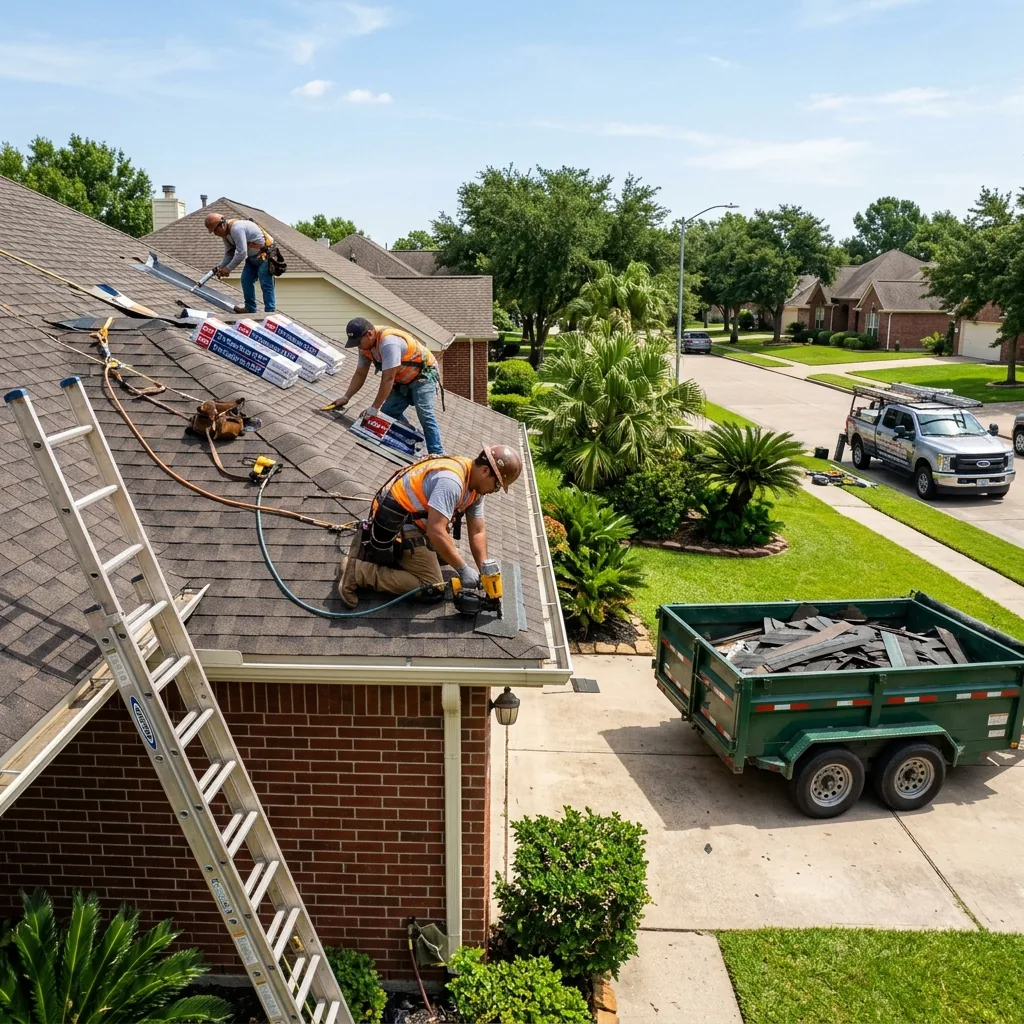
Types of Storm Damage We Repair
Different weather events cause different types of roof damage. Identifying the specific cause determines the repair approach, the materials needed, and how insurance coverage applies.
Hail Damage
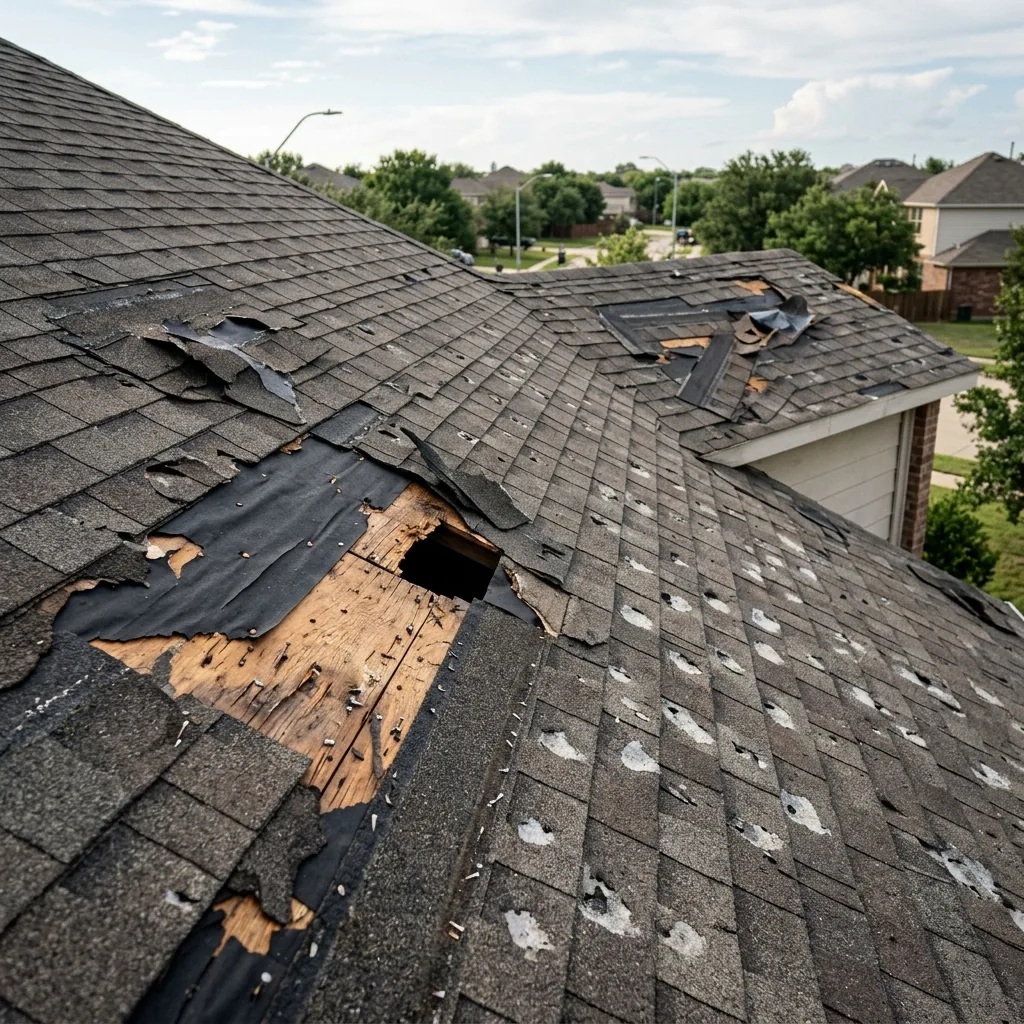
Hail impacts create bruising on asphalt shingles, dislodge protective granules, crack flashing, and dent vent caps and soft-metal components. Harris County recorded 28 hail events in both 2023 and 2024 — many of them producing hailstones large enough to cause functional damage that isn't immediately visible from the ground.
- Circular impact marks on shingles
- Granule loss exposing asphalt layer
- Dented flashing, vents, and gutters
- Hairline cracks in shingle surface
Wind-Related Storm Damage
High winds during severe thunderstorms lift, crack, and tear shingles from the roof surface. Missing shingles after a storm, blown-off ridge caps, and wind-driven rain intrusion beneath lifted materials are the most common wind-related issues in Pasadena. For dedicated wind repair, see our Wind Damage Repair service.
- Missing or displaced shingles
- Lifted or creased shingle tabs
- Blown-off ridge caps
- Wind-driven rain entry at transitions
Hurricane & Tropical Storm Damage
Pasadena has been directly impacted by Hurricane Harvey (2017), Hurricane Ike (2008), Hurricane Rita (2005), Hurricane Beryl (2024), and Tropical Storm Allison (2001). These systems produce sustained high winds that strip entire roof sections, create large openings, and drive water deep into the building envelope — damage that often requires comprehensive restoration rather than spot repairs. See our breakdown of Hurricane Beryl's wind-uplift damage in Pasadena, based on NWS gust data.
- Large sections of missing roofing
- Storm-created roof openings
- Widespread water intrusion
- Structural damage to decking/rafters
Tree & Debris Impact Damage
Fallen trees and large branches can puncture through roofing material, underlayment, and decking in a single impact. Flying debris from construction materials, fencing, or neighboring structures can also cause punctures and tears. If a tree is currently on your roof or the damage requires immediate attention, see our Emergency Roof Repair service.
- Punctures or holes in the roof
- Cracked or broken decking
- Debris embedded in roofing materials
- Structural damage beneath impact zone
Roof Leaking After Storm
A roof that suddenly leaks after a storm — especially one that didn't leak before — indicates the storm created or exposed a new entry point. Common culprits include lifted flashing, wind-displaced shingles, or hail-cracked surfaces that only fail under subsequent rainfall. For full leak diagnosis and permanent repair, see our Roof Leak Repair service.
- New ceiling stains appearing after storms
- Dripping only during heavy rain
- Moisture in attic after weather events
Temporary Post-Storm Protection
When permanent repairs require time for material procurement or scope planning, temporary weatherproofing prevents further damage. This includes emergency patches, sealants, and temporary waterproofing of exposed areas. For large-area covering, see our Emergency Roof Tarping service.
- Exposed decking needing coverage
- Open seams awaiting materials
- Temporary protection between storms
Our Post-Storm Roof Inspection Process
After a storm, we conduct a systematic inspection to identify all damage — both visible and hidden — and provide documentation you can use for insurance claims or repair planning.
Exterior Roof Surface Inspection
We walk every accessible slope, examining shingles for hail impact marks, granule loss, cracks, lifted tabs, and wind damage. We check ridge caps, hip details, and edges for displacement. Each issue is marked and photographed on-site.
Flashing, Penetrations & Metal Components
Storm damage frequently targets transition points. We inspect step flashing, counter-flashing, wall flashing, pipe boots, vent collars, and any exposed metal for dents, displacement, cracking, or seal failure. These components often determine whether a storm creates a leak path.
Gutters, Downspouts & Drainage
We check gutters for dents (a strong indicator of hail size), accumulated granules (evidence of shingle surface degradation), and proper drainage. Displaced or damaged gutters can also redirect water toward the building foundation. Not sure what you're looking at? Here's what granules in your gutters after a storm actually mean.
Interior & Attic Assessment
Where attic access is available, we look for new moisture, water tracking on rafters, damp insulation, and daylight visible through the deck. Interior ceiling and wall surfaces are checked for new staining or moisture that may have appeared during or after the storm.
Damage Report & Repair Estimate
You receive a written damage assessment with all findings, annotated photographs, and a clear repair or replacement estimate. This documentation is formatted for insurance purposes and includes everything your adjuster typically needs to process a claim.
Pasadena, TX Storm Exposure — By the Numbers
Pasadena sits on the Upper Gulf Coast in Harris County — one of the most weather-impacted counties in the nation. These are the conditions your roof is built to withstand — but eventually doesn't.
- Hurricane Harvey (2017) — catastrophic flooding and sustained winds caused widespread residential and commercial roof damage across Pasadena
- Hurricane Ike (2008) — one of the most destructive storms to hit the Houston metro area, with wind damage to roofing systems throughout Harris County
- Hurricane Beryl (2024) — the most recent named storm to impact the Pasadena area, producing high winds and debris damage
- Severe thunderstorm season (Apr–Nov) — recurring high winds, hail, and downpours test roofing systems multiple times per year
- Texas leads the U.S. in hail frequency — while the Gulf Coast sees less hail than North Texas, Harris County still averages ~14 events per year
What to Do After a Storm Damages Your Roof
The steps you take in the days following storm damage directly affect the success of your repair and the outcome of any insurance claim.
Document visible damage immediately
Photograph any damage visible from ground level — missing shingles, debris on the roof, damaged gutters, and any interior water stains. Timestamp matters for insurance claims.
Do not climb on the roof
A storm-damaged roof surface may be unstable, wet, or have concealed structural compromise. Leave roof access to professionals with proper equipment and fall protection.
Schedule a professional inspection promptly
Most insurance policies require claims within 6–12 months. An early inspection catches damage while evidence is fresh and ensures your claim is documented within the policy window.
Be cautious of door-to-door storm chasers
After storms, unlicensed contractors may solicit door-to-door. The Texas Department of Insurance warns against contractors who offer to waive your deductible — this is illegal in Texas. Work with locally established, licensed contractors. Learn more about why deductible waivers are illegal under Texas law.
Get multiple repair estimates
Before committing to a repair, get at least two professional estimates. Each should include a detailed scope of work, materials specified, and a clear timeline. Compare the specifics, not just the bottom-line price.
Storm Damage Documentation for Insurance Claims
We provide the documentation your insurance company needs to process your storm damage claim. While we don't file claims on your behalf, we ensure you have everything your adjuster typically requires.
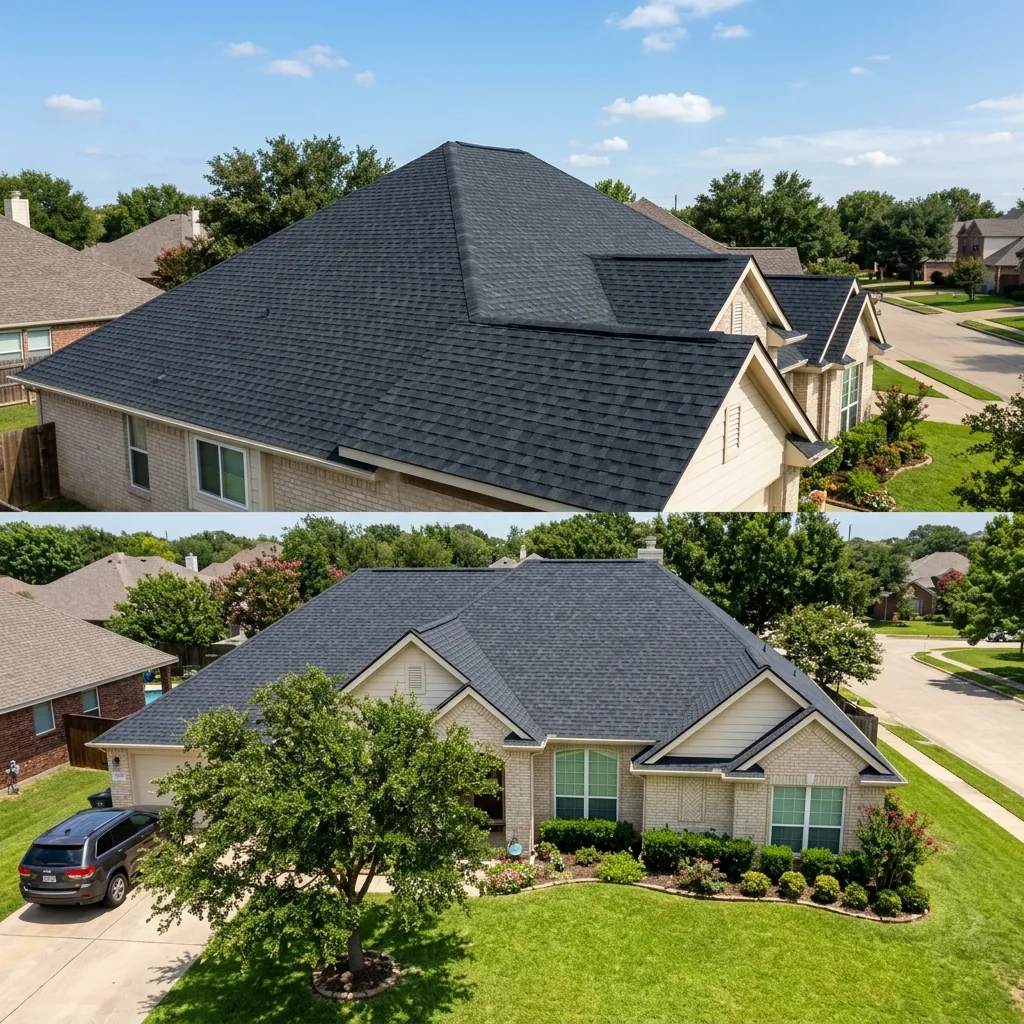
Storm Damage: Repair or Replace?
Not every storm-damaged roof requires full replacement. The correct approach depends on the extent and distribution of the damage, the age and condition of the existing roof, and what your insurance coverage supports.
When targeted repair makes sense: Storm damage is confined to a section — a few missing shingles, localized hail impacts, damaged flashing at specific transitions, or a single puncture from debris. The surrounding roofing system is structurally sound and has remaining service life.
When replacement is the better path: Damage spans multiple roof slopes, hail impacts are widespread across the entire surface, or the roofing material was already near end-of-life before the storm. In these cases, patching multiple areas often costs more than a systematic replacement — and may not restore the roof to a reliable condition.
We assess both options honestly and provide the information you need to make the right decision. If your insurance covers replacement, we document accordingly. If repair is sufficient, we won't recommend more work than is needed. For a deeper look at how this decision is made, see our guide on roof repair vs. replacement in Pasadena.
Storm Damage Roof Repair FAQ
Some storm damage is visible from ground level — missing shingles, displaced ridge caps, debris on the roof. Other damage requires professional inspection — hail bruising, lifted flashing, granule loss, and hairline cracks that only become leaks during the next rainfall.
Not after every rain. But after severe thunderstorms with high winds or hail, tropical storms, or any event where you notice debris on your property, a professional inspection is worthwhile. Harris County averaged 14 hail events per year, with 28 in both 2023 and 2024.
Not necessarily. Damage depends on hailstone size, wind speed, angle of impact, and material condition. Small hail may cause only cosmetic marks. Larger hail — typically 1 inch or greater — can crack shingles, dislodge granules, and compromise the shingle's ability to shed water.
Reporting requirements and deadlines depend on your policy and insurer. Report damage promptly, document it safely, and ask your insurer to confirm the deadline that applies to your claim. Do not assume that every policy allows the same 6-to-12-month window.
If the damage is localized and the surrounding system is sound, targeted repair is appropriate. If damage spans multiple slopes or the material is near end-of-life, replacement may be more cost-effective than patching multiple areas.
Document visible damage with photos from ground level. Don't climb on the roof. If water is actively entering the home, contain it and call for emergency service. For non-urgent damage, schedule a professional inspection as soon as possible.
Yes. Every post-storm inspection includes annotated photos, a written damage assessment, and an itemized repair estimate. We don't file claims on your behalf, but we provide everything your adjuster needs to process the claim.
Storm-exclusive leaks usually involve failure points that only activate under specific conditions — wind-driven rain under lifted shingles, overwhelmed valleys during heavy downpours, or partially detached flashing that allows entry at certain wind angles.
Storm Hit Your Roof? Get a Free Damage Inspection
If you've experienced severe weather in Pasadena, don't wait for a leak to appear. Schedule a free post-storm roof inspection with photo documentation. We'll identify all damage, provide a written report, and give you a clear repair estimate.