
Professional Roof Leak Repair in Pasadena, TX
When water stains appear on your ceiling or you notice moisture during rainfall, identifying the actual entry point is the critical first step. We systematically locate, diagnose, and repair roof leaks for homeowners and businesses throughout Pasadena and Southeast Houston — addressing the source, not just the symptom.
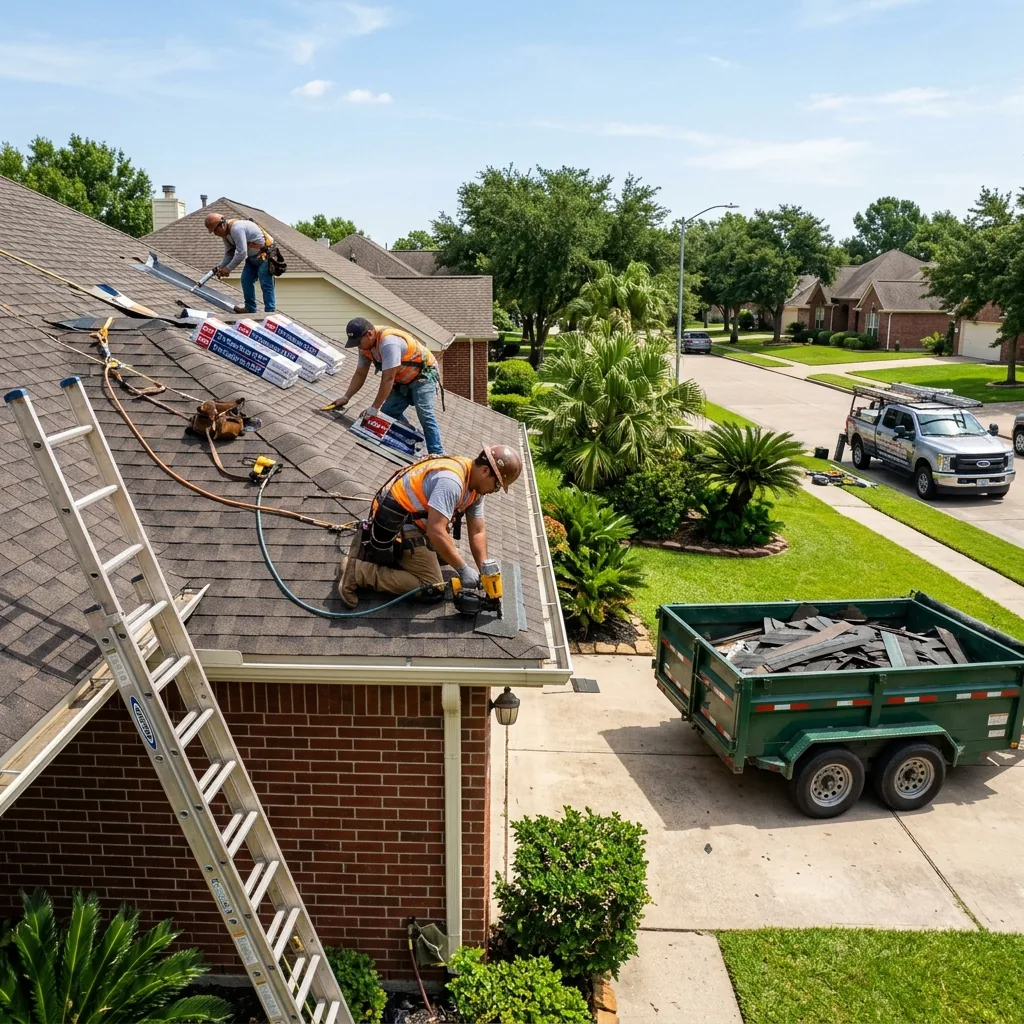
Signs Your Roof May Have an Active Leak
Some leaks are immediately obvious. Others develop slowly and reveal themselves only after moisture has traveled well beyond the original entry point. These conditions warrant professional evaluation.
Water stains or discoloration on interior ceilings
Brown or yellowish rings on ceiling drywall are one of the most common indicators of moisture reaching the interior from above. The stain location often does not align with the roof entry point — water travels along rafters and decking before dripping through.
Dripping water during or after rainfall
Active dripping during storms points to a direct breach in the roofing system. Water may enter through damaged flashing, compromised valleys, cracked pipe boots, lifted shingles, or failed penetration seals. Pasadena averages 57 inches of rain annually, so even small breaches produce significant water volume.
Musty odor in rooms or attic spaces
A persistent damp smell — particularly in upper-floor rooms or attic areas — can indicate moisture that has been accumulating from a slow, intermittent leak. In Pasadena's high humidity (routinely 70–80%), trapped moisture develops mold and mildew faster than in drier climates.
Bubbling, peeling, or blistering paint on walls or ceilings
Paint that separates from drywall surfaces usually means moisture is present behind the finish. This secondary symptom suggests water has been reaching the area long enough to affect the substrate — often from a roof-to-wall flashing failure or a leak traveling down interior framing.
Interior Signs Homeowners Can Safely Look For
You don't need to climb on your roof to identify potential leak symptoms. These checks can be performed safely from inside the home before scheduling a professional roof leak inspection.
Inspect ceilings in upper-floor rooms
Look for any new discoloration, bubbling paint, or soft spots that may indicate moisture from above. Pay extra attention after heavy rain events.
Check attic spaces when safely accessible
Look for daylight visible through the roof boards, damp insulation, water tracks on rafters, or dark staining on decking — all indicators of active or recent water intrusion.
Note when the leak appears
Does it only happen during heavy rain? Wind-driven rain? Every rainfall? This timing information helps narrow the search to specific areas on the roof surface.
Check walls near the roofline
Water from roof-to-wall transitions or flashing failures can travel down interior walls, causing paint bubbling or staining near the ceiling line — a common issue in Pasadena ranch-style homes.
Look at interior closets and corners
Leaks sometimes travel to areas homeowners rarely check — interior closets, behind furniture, or ceiling corners where evidence can go unnoticed for weeks.
Common Areas Where Roof Leaks Begin
Roof leaks don't happen randomly. Certain areas of the roofing system are more vulnerable to water intrusion — particularly in Pasadena, TX, where 57 inches of annual rainfall, Gulf Coast humidity, and intense UV exposure accelerate material deterioration year-round.
Flashing Transitions
Flashing protects transitions between the roof surface and walls, chimneys, skylights, and other structures. When step flashing lifts, counter-flashing corrodes, or wall flashing loses its seal, water enters behind the roofing materials without obvious surface evidence. Roof flashing leak repair is one of the most common jobs we handle in Pasadena — see why flashing at walls and chimneys tends to leak for a closer look at how these failures develop.
- Lifted or separated step flashing
- Deteriorated counter-flashing seals
- Corroded metal flashing at roof-to-wall transitions
Roof Vents & Pipe Boots
Every pipe, vent, and equipment mount that passes through the roof surface creates a potential leak point. Pipe boots crack and split under Pasadena's intense UV and thermal cycling. Plumbing vent collars and exhaust vent seals deteriorate over time — sometimes leaking for months before anyone notices a ceiling stain below. Read more on why pipe boots dry-rot and cause leaks around vent penetrations.
- Cracked or split pipe boots
- Failed sealant around plumbing vents
- Loose exhaust vent flashing
Roof Valleys
Valleys channel large volumes of water during storms. When valley flashing is improperly sealed or surrounding materials have deteriorated, water enters beneath the roof covering. In Pasadena, where sudden downpours regularly exceed 2 inches per hour, valleys are under constant stress during storm season. Learn more about what causes roof valley leaks and how they're repaired.
- Worn or corroded valley flashing
- Debris accumulation restricting flow
- Cracked sealant along valley edges
Damaged Roofing Materials
Missing, cracked, or lifted shingles create direct pathways for rainwater. UV degradation and thermal cycling weaken asphalt binders faster in Southeast Texas than in milder climates. Loose nail fasteners and exposed underlayment further accelerate water intrusion. For extensive shingle damage, see our Shingle Roof Repair service.
- Missing or displaced shingles
- Cracked or split roofing surfaces
- Exposed underlayment or nail heads
Skylight Leaks
A skylight leak is not automatically a roofing-system failure. Water intrusion around skylights can originate from deteriorated skylight flashing, failed perimeter seals, or even the skylight assembly itself. Proper diagnosis determines whether the issue is a roofing repair, a seal replacement, or a skylight unit problem — see how to tell a skylight leak from a roofing leak.
- Moisture around skylight frame
- Staining on ceiling near skylight
- Deteriorated skylight flashing seals
Flat or Low-Slope Roof Areas
Properties with flat or low-slope sections face additional risks from ponding water and membrane deterioration. These areas don't shed water as effectively as sloped roofs — a particular concern in Pasadena where heavy storms can deposit significant water volume in minutes. For membrane-specific issues, see our Flat Roof Repair service.
- Standing water after rain
- Membrane punctures or open seams
- Deteriorated edge details
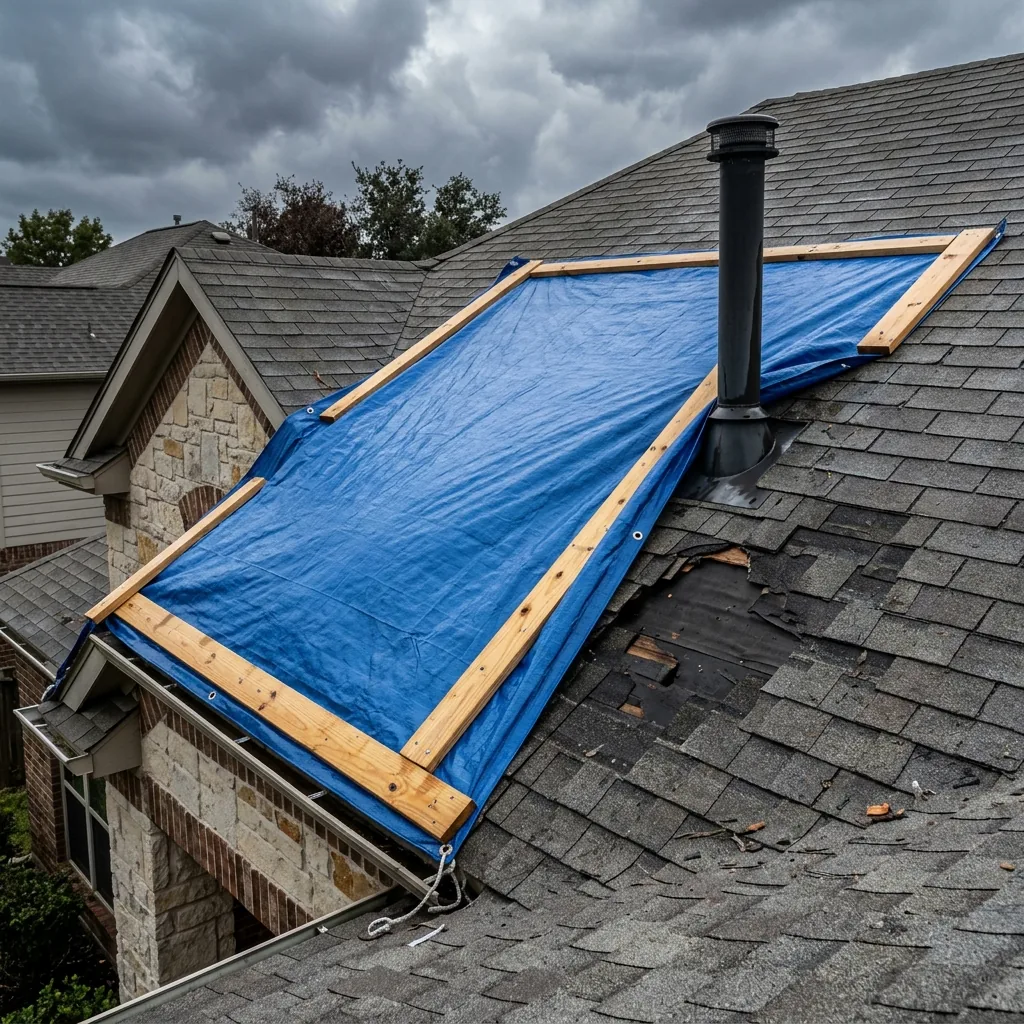
Why the Ceiling Stain May Not Be Directly Below the Leak
One of the most common misconceptions about roof leaks is that the ceiling stain marks the exact location of the roof failure. In reality, water frequently travels along the roof deck, down rafters, and across sheathing before finding a point where it can drop through to the living space below.
In Pasadena homes — many of which feature truss-framed roof structures common to Southeast Texas ranch-style construction — water can travel several feet before it drips through. This means the actual entry point on the roof surface may be in a completely different section than where the stain appears indoors.
Ceiling water stains or dripping during or after rain can indicate a roofing leak, but the source should be inspected before repair. Stains can also result from plumbing leaks, HVAC condensation, or moisture intrusion through walls — all of which are more common than many homeowners realize.
This is why effective leak repair starts with proper tracing, not assumptions. Our technicians follow the water's path from interior evidence back to the roof surface entry point before any repair begins.
How Professional Roof Leak Detection Works
We don't guess where the leak is coming from. Every repair starts with a structured diagnostic process that identifies the root cause before any repair work begins.
Review Interior Water Evidence
We start inside the home, examining ceiling stains, damp spots, and any visible moisture trails. If attic access is available, we check the underside of the roof deck for water tracks, stained rafters, or damp insulation that can help narrow the search area on the roof above.
Inspect Potential Exterior Entry Points
On the roof surface, we systematically check the areas most likely to be responsible — flashing details, pipe boots, vent collars, valleys, material damage, and roof-to-wall transitions. Each potential entry point is evaluated based on its condition and proximity to the interior evidence.
Trace the Most Likely Leak Path
We connect the exterior findings to the interior symptoms, determining how water is traveling from the entry point to the visible damage. This step confirms whether the identified roof failure is actually responsible for the leak — preventing unnecessary repairs to areas that aren't the source.
Repair and Reevaluate the Affected Area
Once the source is confirmed, we complete the repair and inspect surrounding components for additional vulnerabilities. A localized repair is only effective if the adjacent materials are still sound — otherwise, the next heavy Pasadena rain may reveal a new entry point nearby.
Why Pasadena, TX Roofs Are More Vulnerable to Leaks
Pasadena sits in a humid subtropical climate zone (Köppen Cfa) on the Upper Texas Gulf Coast — one of the most demanding environments for roofing systems in the United States.
- Heavy, sustained rainfall — Pasadena regularly exceeds 2 inches per hour during summer thunderstorms, testing every seal and seam on the roof surface
- Tropical storms and hurricanes — sustained winds, driving rain, and airborne debris all target flashing, penetrations, and weak material points
- Persistent high humidity — moisture between 70–80% daily slows post-rain drying, trapping water against decking and underlayment
- Intense UV exposure — direct Texas sun breaks down asphalt binders, rubber boot seals, and adhesive compounds faster than northern climates
- Thermal cycling — daily expansion and contraction from extreme heat weakens fasteners, seams, and sealant joints over years of exposure
- Salt-laden air — proximity to Galveston Bay accelerates corrosion of metal flashing, fasteners, and vent collars on Pasadena rooftops
Repair Options Based on the Leak Source
Not every leak requires the same scope of work. Here's what to expect depending on the source and severity of the water intrusion.
Roof Leak Repair FAQ
We follow a systematic approach — starting with the interior water evidence, then moving to the roof surface to check penetrations, flashing, valleys, and material conditions. Water often travels along the roof deck before dropping through a ceiling, so the stain location and the actual entry point are frequently in different areas.
It can, if the original repair addressed the symptom rather than the actual cause. A recurring leak usually means either the entry point was misidentified, or a nearby component — such as deteriorated flashing or damaged underlayment — wasn't addressed during the initial repair.
A leak that only appears during heavy downpours typically involves a failure point that isn't directly exposed to light rain — such as a compromised valley, a partially lifted flashing detail, or an area where wind-driven rain forces water beneath roofing materials that would normally shed lighter rainfall. Pasadena's 57 inches of annual rainfall means these issues become more frequent over time.
Not always. Ceiling stains can also result from plumbing leaks, condensation from HVAC systems, or moisture intrusion through walls. A proper roof leak inspection determines whether the stain is roof-related or originates from another source entirely.
Most localized leak repairs are completed within a single day once the source is identified. In some cases, the diagnosis itself takes time — particularly when the leak path is complex or when interior access is needed to trace the water's travel route.
A roof leak inspection covers the full roofing system — penetrations, pipe boots, vent collars, flashing at walls and transitions, valley conditions, ridge and hip details, and the general condition of the roofing material. We also check gutters, drainage paths, and (when accessible) attic-side indicators like damp insulation or water-tracked rafters.
In most cases, yes. If the damage is localized and the surrounding roofing system is still structurally sound, a targeted repair is the appropriate approach. Full replacement is only recommended when damage is widespread or the roof has aged past its serviceable life.
Yes. For active leaks causing immediate interior water damage, we prioritize rapid response — temporary weatherproofing to stop water entry, followed by a permanent repair once the source is properly diagnosed. For urgent situations, see our Emergency Roof Repair service.
Seeing Water Stains or an Active Leak? Schedule a Roof Evaluation
If water is entering your home through the roof — or you suspect a developing leak based on ceiling stains, damp spots, or musty odors — contact us to schedule a professional evaluation. We'll locate the source, explain what's needed, and provide a written estimate before any work begins.