
Wind Damage Roof Repair in Pasadena, TX
When high winds hit Pasadena — whether from a Gulf Coast thunderstorm, a tropical system, or a sudden severe gust — your roof takes the direct force. Missing shingles, blown-off ridge caps, lifted flashing, and wind-driven rain entry are the most common results. We inspect, document, and repair wind-damaged roofs throughout Southeast Houston.
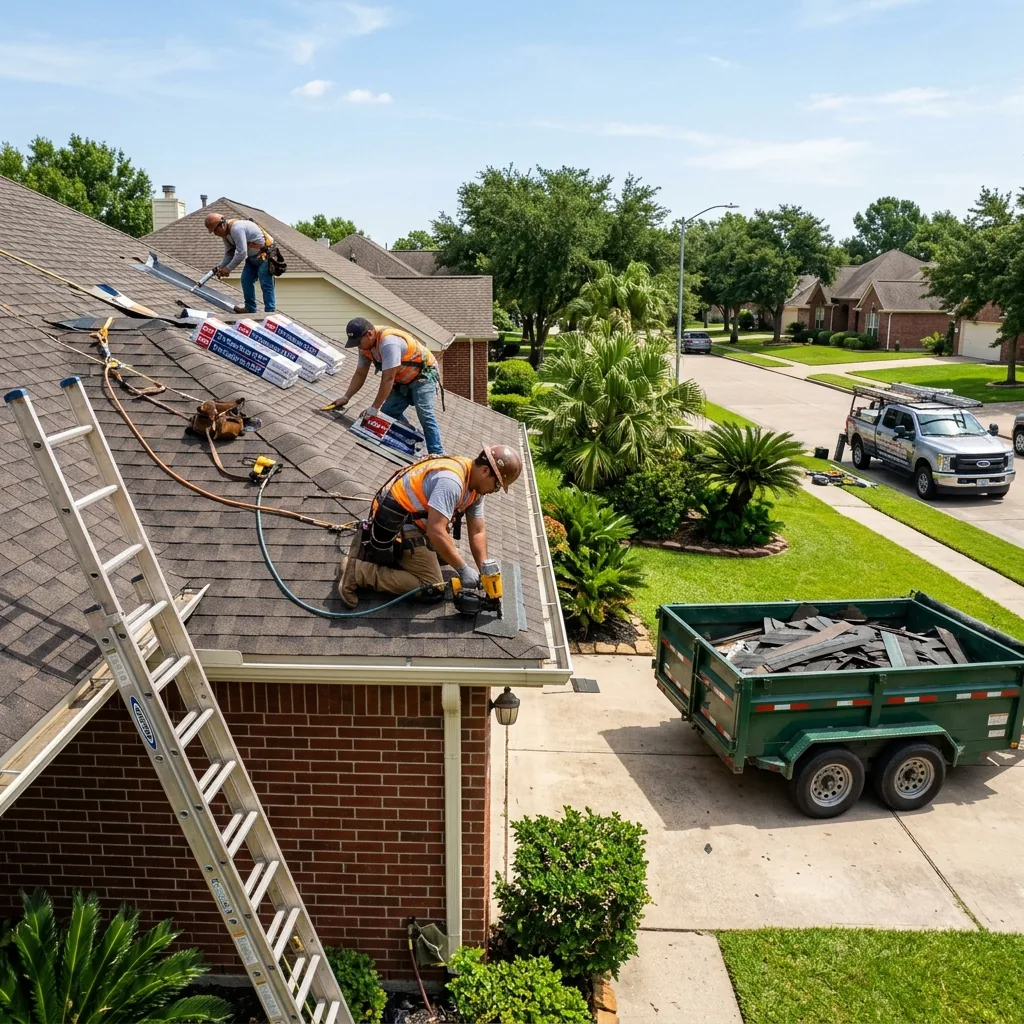
How High Winds Damage Your Roof
Wind doesn't damage a roof uniformly. It targets the most vulnerable points — edges, ridges, transitions, and any area where materials have aged or installation was imperfect. Here's what we see most frequently in Pasadena.
Missing Shingles After Wind
Wind creates uplift pressure that pulls shingles away from the deck. When the adhesive bond fails, shingles tear free — leaving the underlayment exposed to direct rainfall and UV. Missing shingles after a wind event are one of the most common calls we receive in Pasadena, particularly from properties with standard 3-tab shingles rated for only 60–70 MPH. Not sure whether your roof needs a patch or a full replacement? See our guide on deciding between repair and replacement after missing shingles.
- Bare patches visible on roof surface
- Shingle debris in yard or gutters
- Exposed underlayment or felt paper
Blown-Off Shingles
Blown-off shingles go beyond simple detachment — the material has been torn away entirely, often taking the nail heads and portions of the shingle below with it. When shingles blow off in clusters, the exposed roof area is immediately vulnerable. At 58–74 MPH — common during Gulf Coast severe thunderstorms — even properly installed roofs can lose material. For a closer look at the uplift mechanics behind this, see how high winds tear asphalt shingles from a roof.
- Large area of bare roof surface
- Torn shingle fragments scattered
- Nail holes exposed to rain
Lifted & Loose Shingles
Not every wind-damaged shingle leaves the roof. Many shingles lift, crease, or loosen without fully detaching. The adhesive seal beneath has broken, but the fasteners still hold the material in place. These shingles appear mostly normal from the ground — but they've lost their wind resistance and water seal. The next wind event will likely tear them free, and wind-driven rain can enter beneath them immediately. For general shingle repair, see Shingle Roof Repair.
- Shingle tabs curling upward at edges
- Visible crease lines across shingle face
- Shingles that flex when touched
Ridge Cap & Roof Edge Damage
Ridge caps and roof edges receive the highest wind forces on any roof. Ridge cap shingles are the first to lift or blow off during a wind event because they sit at the apex where uplift pressure is greatest. Drip edge and eave details are also vulnerable — displacement here allows wind-driven rain to enter behind the fascia and into the soffit cavity.
- Missing or displaced ridge caps
- Loose drip edge along eaves or rakes
- Gaps visible at roof-to-fascia transition
Wind-Damaged Flashing
Flashing at wall transitions, chimneys, and vents can be lifted, loosened, or partially detached by high winds. Because flashing protects critical transition points, even minor displacement creates a direct path for water entry. For comprehensive flashing diagnosis, see Roof Leak Repair.
- Flashing pulled away from wall surface
- Gaps visible at chimney or vent base
- Loose counter-flashing sections
Wind-Driven Rain Intrusion
Wind-driven rain forces water horizontally — under lifted shingles, behind loosened flashing, and into gaps at edges and transitions that remain dry during vertical rainfall. A roof can appear fully watertight during normal rain but leak significantly during storms with 40+ MPH winds. In Pasadena, where thunderstorm wind gusts routinely exceed this threshold, wind-driven rain leaks are a recurring problem.
- Leaks only during wind-driven rain
- Water stains near roof edges or walls
- Moisture at flashing transitions
Wind Speed Thresholds & Roof Damage
Not all wind events cause damage. But understanding the relationship between wind speed and roofing materials helps explain why some storms leave marks and others don't.
- Wind uplift, not direct force — wind flowing over the roof creates vacuum pressure that pulls shingles upward, which is why damage starts at edges and ridges
- 3-tab vs architectural — 3-tab shingles are single-layer and rated for 60–70 MPH; architectural (laminated) shingles are multi-layer and rated for 80–130 MPH
- Installation determines real-world performance — incorrect nail placement, insufficient fasteners, or missed adhesive strips can lower a roof's actual wind resistance below its rated capacity
- Seal degradation over time — Pasadena's intense UV and thermal cycling weaken shingle adhesive bonds year over year, making older roofs increasingly vulnerable to winds well below their original rating
- Gulf Coast context — severe thunderstorm wind gusts in Southeast Texas regularly exceed 50–60 MPH, and tropical systems can produce sustained winds well above 75 MPH for hours
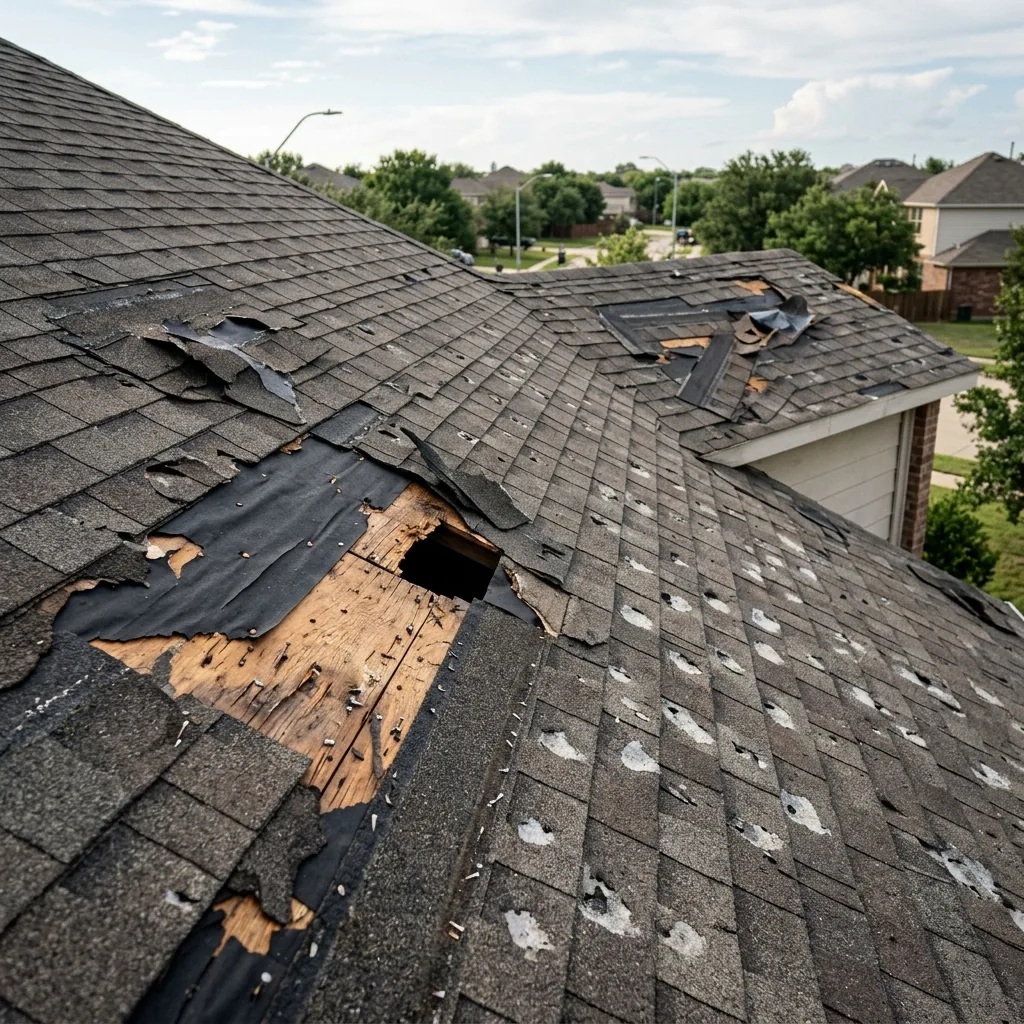
Why Exposed Underlayment After Wind Is Not a Permanent Barrier
When wind removes shingles, the layer you see underneath is the underlayment — typically asphalt-saturated felt paper or a synthetic membrane. While underlayment provides a secondary water barrier during construction, it is not designed for extended direct exposure to rainfall and UV.
In Pasadena's climate — with 57 inches of annual rainfall and intense summer UV — exposed underlayment deteriorates rapidly. Felt paper can begin to crack and curl within weeks. Synthetic underlayment is more durable but still degrades under prolonged direct sun.
Once the underlayment fails, rainwater reaches the roof deck directly, leading to wood rot, insulation saturation, and interior water damage. The longer exposed underlayment or decking goes unprotected, the more extensive — and expensive — the repair becomes.
If wind has exposed a large area of your roof, temporary protection may be needed before permanent shingle replacement. For immediate large-area coverage, see our Emergency Roof Tarping service.
Wind Damage Inspection Process
Wind damage can be obvious or subtle. Our inspection identifies both visible displacement and hidden vulnerabilities that will fail during the next wind event.
Shingle Surface Assessment
We walk the roof surface checking for missing, blown-off, lifted, loose, and creased shingles. Each affected area is photographed and its location mapped. We also identify shingles where the adhesive seal has broken but the material hasn't yet displaced — these are the next to fail.
Ridge Caps, Edges & Hip Details
The highest wind forces concentrate at ridges, hips, eaves, and rakes. We inspect every ridge cap shingle, hip detail, drip edge, and eave transition for displacement, lifting, or loosening. These are the first areas to fail and the most common source of wind-driven rain entry.
Flashing & Penetration Check
We examine all flashing at wall transitions, chimneys, skylights, and vents for wind-induced lifting, loosening, or separation. Even minor flashing displacement at these points creates a leak path that will activate during the next wind-driven rain event.
Underlayment & Decking Evaluation
Where shingles are missing, we assess the condition of the exposed underlayment and visible decking. We determine whether the underlayment is still providing temporary protection or has already begun to deteriorate, and whether any decking shows moisture damage.
Documentation & Repair Plan
You receive a complete damage report with annotated photos, an assessment of repair vs. replacement scope, and a written estimate. This documentation supports insurance claims and gives you a clear picture of what's needed and what it costs.
Wind Damage Repair Based on Severity
The scope of wind damage repair depends on how many shingles are affected, whether flashing or structural components are compromised, and the overall condition of the existing roof.
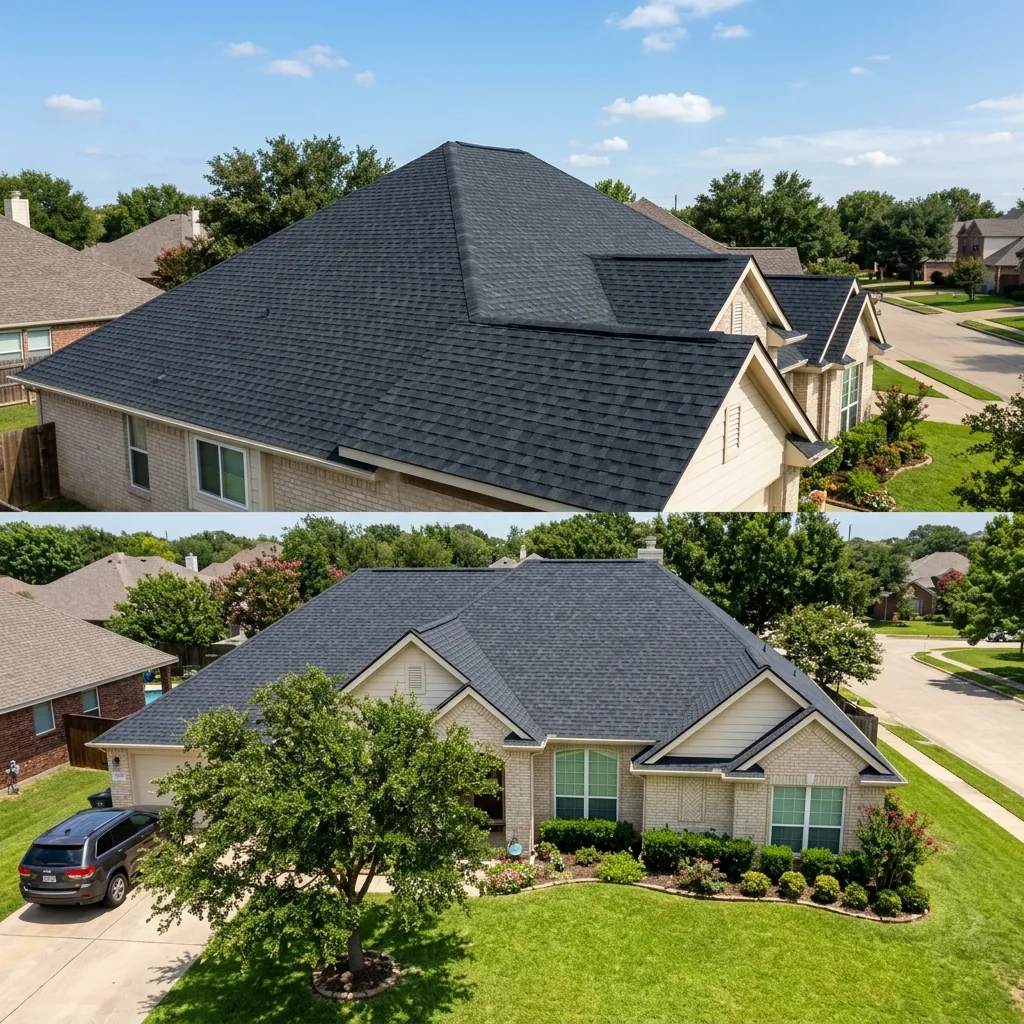
Wind Damage You Can't See from the Ground
The most dangerous wind damage is the kind homeowners can't detect visually. Wind can break the adhesive seal on shingles without displacing them. It can loosen flashing at transitions without pulling it free. It can shift ridge caps just enough to create a gap — but not enough to notice from 30 feet below.
These subtle failures create a compounding vulnerability. The next wind event finds an already-weakened system and causes further damage. Wind-driven rain finds entry points that didn't exist before the previous storm. By the time a ceiling stain appears, the damage chain has been progressing for weeks or months.
This is why post-wind roof inspection matters even when the roof looks fine from street level. Roof-level assessment catches broken seals, shifted components, and compromised edges before they escalate into leaks and interior damage. Curious how wind can compromise a roof while every shingle stays in place? Read can wind damage a roof without blowing shingles off.
Wind Damage Roof Repair FAQ
Damage can begin at 40–50 MPH for older or poorly sealed shingles. Standard 3-tab shingles are rated for 60–70 MPH; architectural shingles for 80–130 MPH. Real-world performance depends on roof age, installation quality, and wind duration — not just peak gust speed.
Yes. Exposed underlayment is not designed for long-term weather exposure. In Pasadena's climate — 57 inches of annual rainfall — exposed underlayment can deteriorate within weeks, leading to leaks, wood rot, and interior damage.
Lifted shingles have a broken adhesive seal but remain physically attached. Blown-off shingles have completely separated from the roof. Both expose the roof to water — but lifted shingles can sometimes be resealed if the material is undamaged. For a full breakdown, see missing vs. lifted vs. loose shingles: what's the difference.
Wind-driven rain forces water horizontally — under lifted shingles, behind loosened flashing, and into gaps at edges. A roof can appear watertight during normal rain but leak during storms with 40+ MPH winds.
If damage is limited to a small area and the surrounding roof is sound, spot replacement is appropriate. If damage is widespread or the roof is near end-of-life, full replacement is usually more cost-effective.
Yes. Wind can break adhesive seals, loosen flashing, and shift ridge caps without visibly displacing them. These failures are invisible from the ground but create vulnerability to the next wind event and wind-driven rain entry.
Arrange an inspection as soon as it is safe. Unaddressed wind damage can worsen with subsequent weather, and exposed underlayment can deteriorate. Document damage and report it promptly to your insurer; confirm your policy's reporting requirements and claim deadlines rather than assuming a fixed filing window.
If wind has created an active opening — large sections of missing shingles, exposed decking, or active water entry — that's an emergency. We provide same-day response. See our Emergency Roof Repair service for details.
High Winds Damaged Your Roof? Get a Free Inspection
If you've noticed missing shingles, blown-off ridge caps, or debris after a wind event — or even if you suspect damage you can't see — schedule a free wind damage inspection. We'll identify everything, document it for insurance, and give you a clear repair plan.